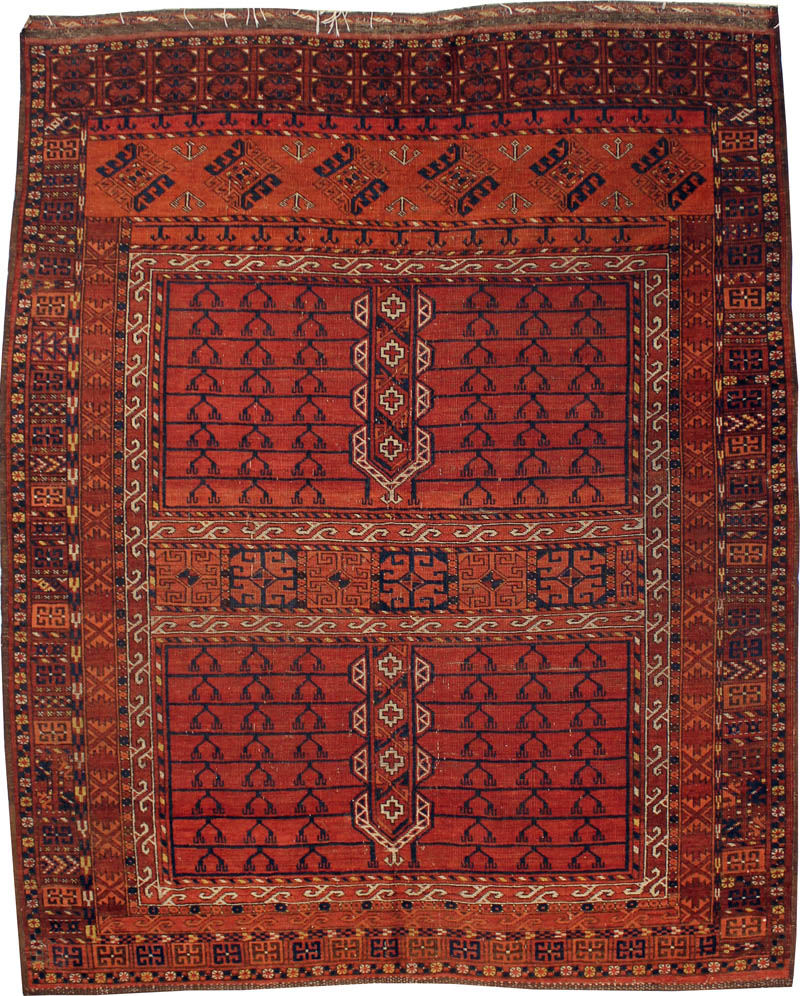
Antique Turkoman Ensi Rug
Size: 4'0" x 5'3"
Date: 1880s
Material: Wool on wool
An exceptional late-19th-century Turkoman Ensi, a highly symbolic weaving traditionally used as a tent door hanging by the nomadic tribes of Central Asia. Among the most revered forms of Turkoman weaving, the Ensi occupies a special place in tribal culture, serving both a practical and ceremonial role within the yurt.
This example displays the classic Ensi layout, divided into four panels by prominent vertical and horizontal bars, creating a balanced architectural composition. The rich madder-red field is decorated with rows of stylized tribal motifs and protective symbols, while the central dividers feature geometric devices believed to represent guardianship, prosperity, and spiritual protection.
The upper panel contains additional tribal ornamentation, a distinctive feature of antique Ensis, adding visual complexity and reinforcing the rug’s ceremonial character. Multiple borders frame the composition, including traditional Turkoman geometric guard borders and bold reciprocal motifs that enhance the rug’s strong graphic presence.
Handwoven entirely of wool, this Ensi exhibits the lustrous pile, durable structure, and natural dyes that collectors seek in authentic 19th-century Turkoman weavings. The restrained palette of deep reds, rich browns, ivory accents, and indigo details creates a sophisticated visual harmony while emphasizing the rug’s tribal origins.
Rarely found in this level of preservation, antique Turkoman Ensis are among the most culturally significant and collectible forms of Central Asian textile art. This piece stands as a remarkable example of nomadic craftsmanship, combining historical importance, symbolic design, and timeless decorative appeal.