Rare Antique Khotan Silk Rug
Size: 5'2" × 8'0"
Origin: Khotan, Eastern Turkestan (Xinjiang)
Age: Early 19th Century (circa 1800–1820)
Material: Silk pile on cotton foundation
Dyes: Natural dyes
An exceptionally rare early Khotan silk weaving, this rug embodies the refined artistic traditions that flourished along the ancient Silk Road. Woven entirely with silk pile on a cotton foundation, it displays the distinctive synthesis of Chinese, Central Asian, and Persian influences that made Khotan carpets among the most sought-after textiles of the region.
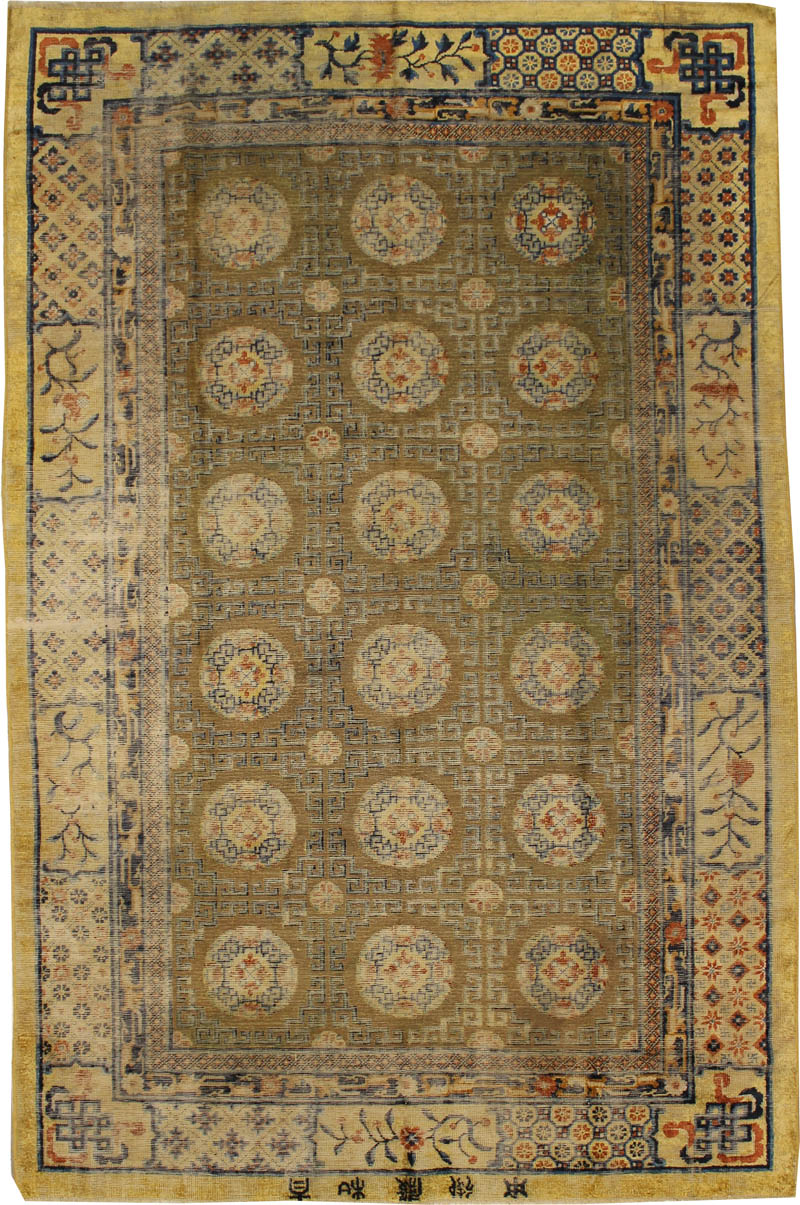
The field is organized around a lattice of angular fretwork enclosing rows of circular medallions, a design strongly associated with classical Khotan production. The soft olive-gold ground, now mellowed with age, creates an elegant backdrop for the ivory, pale blue, and muted coral medallions that float across the surface with remarkable balance and harmony. Surrounding borders feature auspicious motifs, stylized floral elements, and symbolic corner devices drawn from Chinese decorative vocabulary.
More than two centuries of age have bestowed the rug with a wonderfully atmospheric patina. Areas of wear and oxidation have softened the design, creating a painterly appearance that collectors of early Silk Road textiles find especially desirable. Rather than diminishing the piece, this wear enhances its historical character and underscores its authenticity.
Examples of early nineteenth-century silk Khotan rugs are seldom encountered, particularly in such decorative proportions. Combining exceptional age, luxurious materials, and a design rooted in the cultural crossroads of East and West, this rug represents a remarkable surviving example of one of the most fascinating weaving traditions of Central Asia.